Make showering easier with TubStep™
A hands-free, one-step hair clog prevention system for shower and bathtub drains.
Explore the design ↓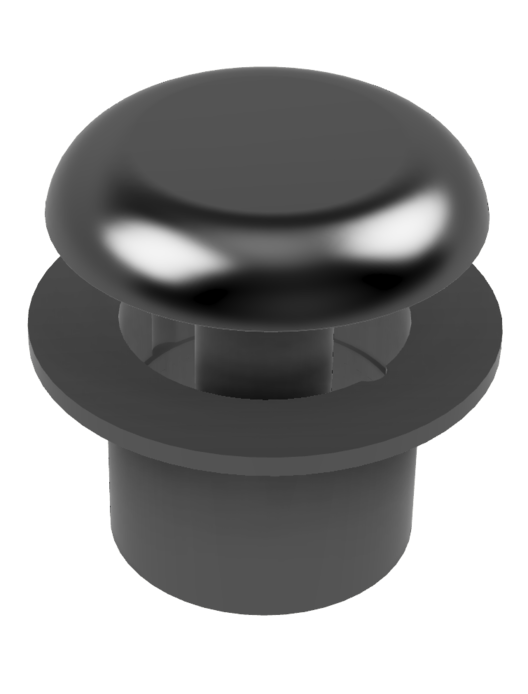
A hands-free, one-step hair clog prevention system for shower and bathtub drains.
Explore the design ↓
01 / Project overview
TubStep is a drain insert that stops hair clogs before they form. The user never touches hair and never pours chemicals down the drain.
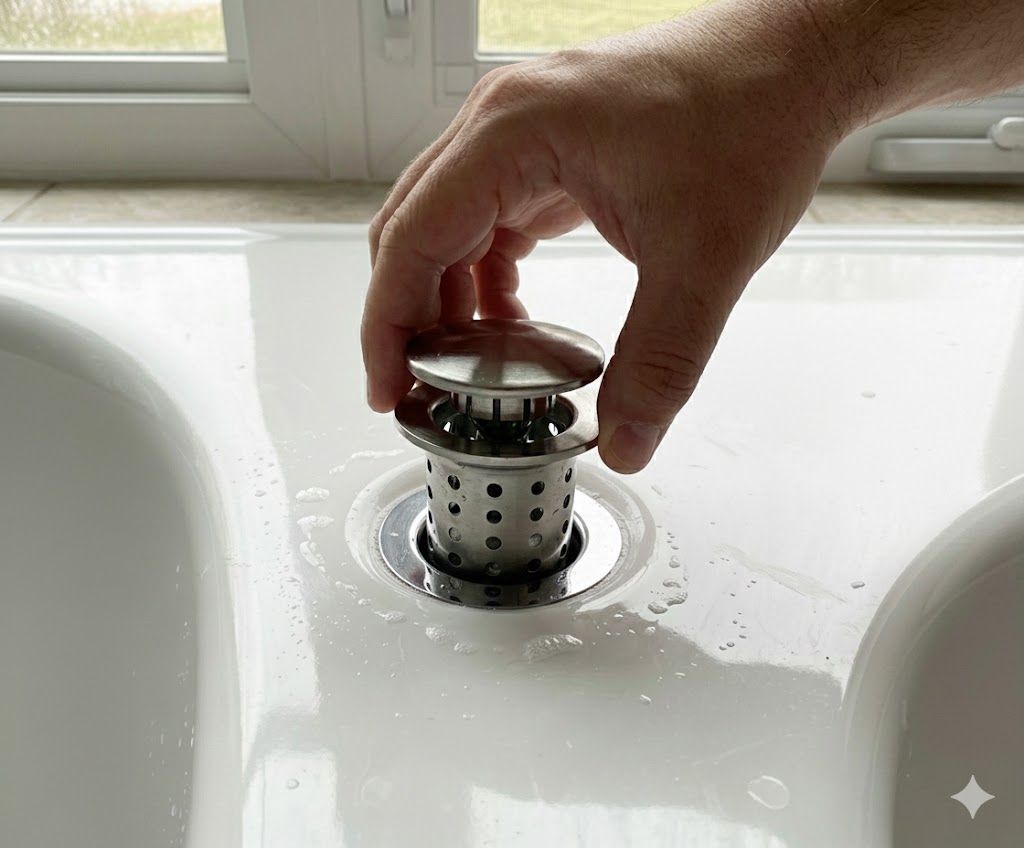
Step down, walk away.
Stepping on the cap drives a cam that turns the downward press into rotation. Overlapping blades shear hair like scissors, and a return spring resets the cap.
02 / How it works
One press, four things happen. All stainless steel 303, with no electronics, no chemicals and no maintenance.
▶ Watch the TubStep video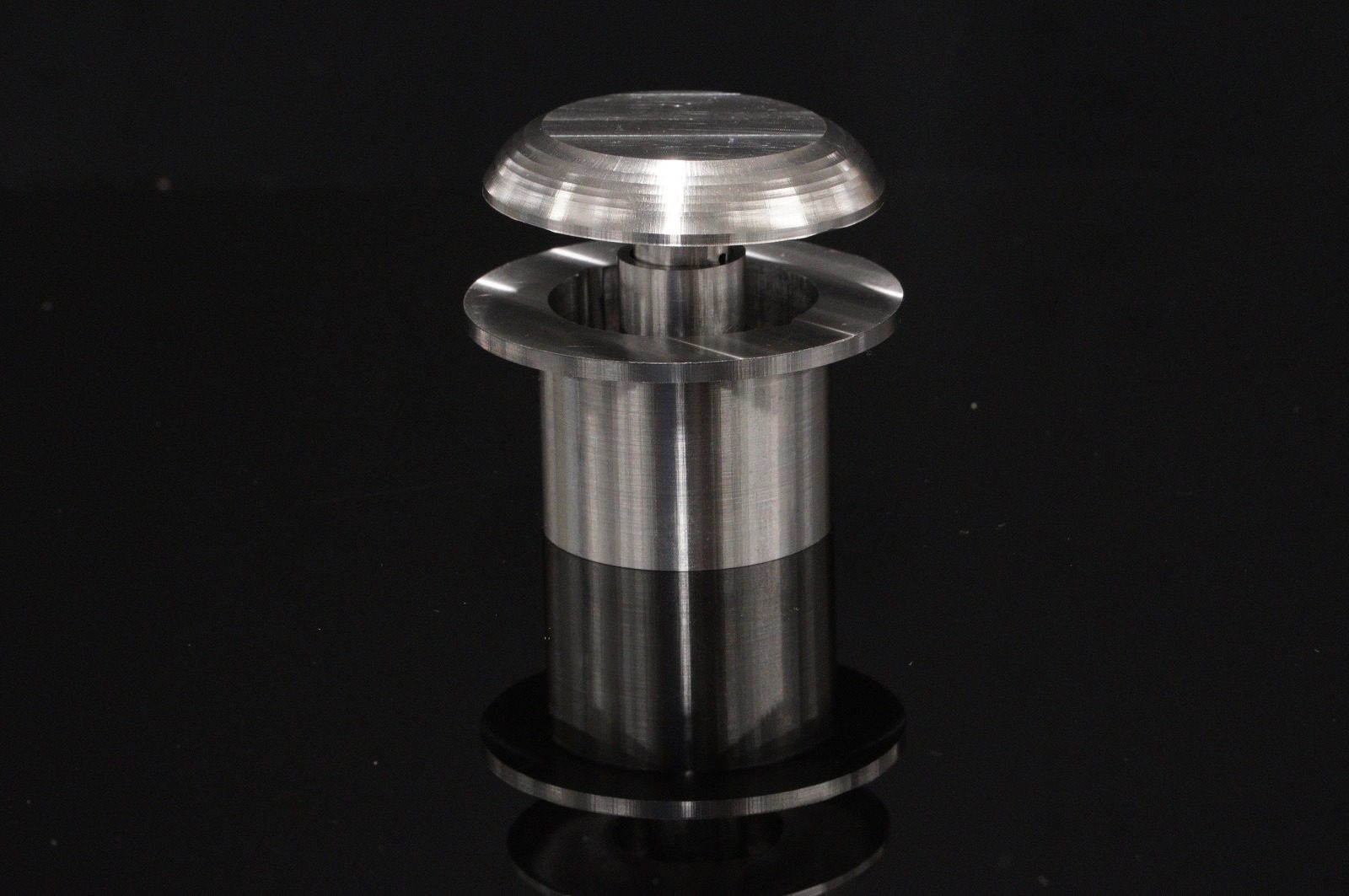
The domed cap and downforce plate travel down together.
A helical slot on the cam shaft spins the rotor as the plate drives down.
The rotor blade sweeps past the fixed blades, shearing strands into short pieces that flush.
The cap rises back to flush. The rebound tells the user it worked.
03 / Components
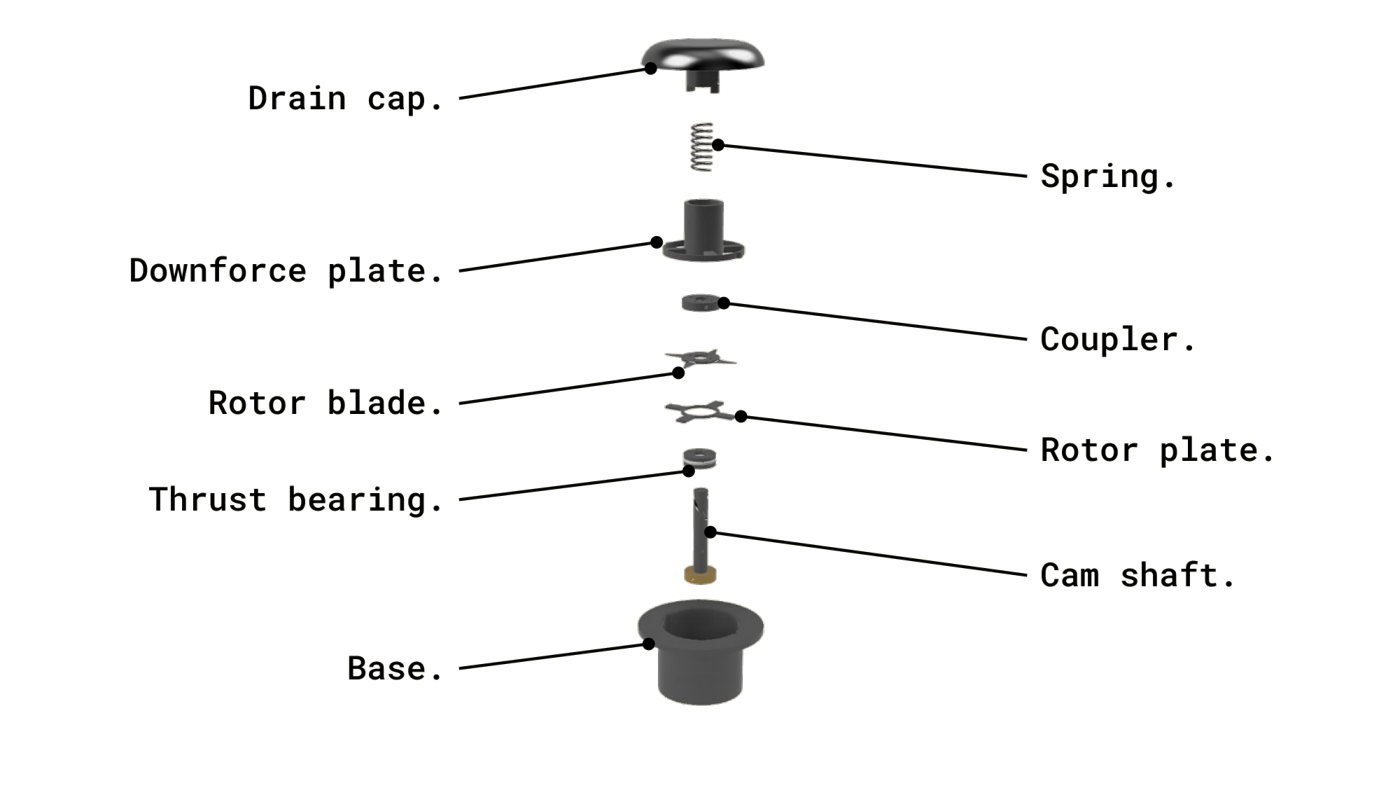
04 / Literature search and prior art
The market is dominated by passive strainers the user has to empty by hand, or chemical treatments used after the clog has already formed.
American households with a shower or bathtub
Cause of shower and bathtub drain clogs: hair
| Product | Type | Assessment |
|---|---|---|
| Press Drain | Treatment | ✗ Not a real solution. Does little to stop hair. |
| TubShroom | Treatment | ✗ Shifts the problem. You still pull hair out by hand. |
| Drain Snake | Treatment | ✗ Reactive only. Used after the clog forms. |
| Drano | Treatment | ✗ Harsh chemicals, weak on dense clogs. |
| TubStep™ | Solution | ✓ The only active, hands-free solution |
Cuts hair instead of passively collecting it.
Activated by the foot during the shower.
Proven with a razor blade proof of concept before machining.
Ten parts, no changes to the tub or pipe.
05 / Prototyping journey
We moved from quick FDM prints to machined stainless steel, testing every version with water, real hair and a real foot. Each failure decided the next build.
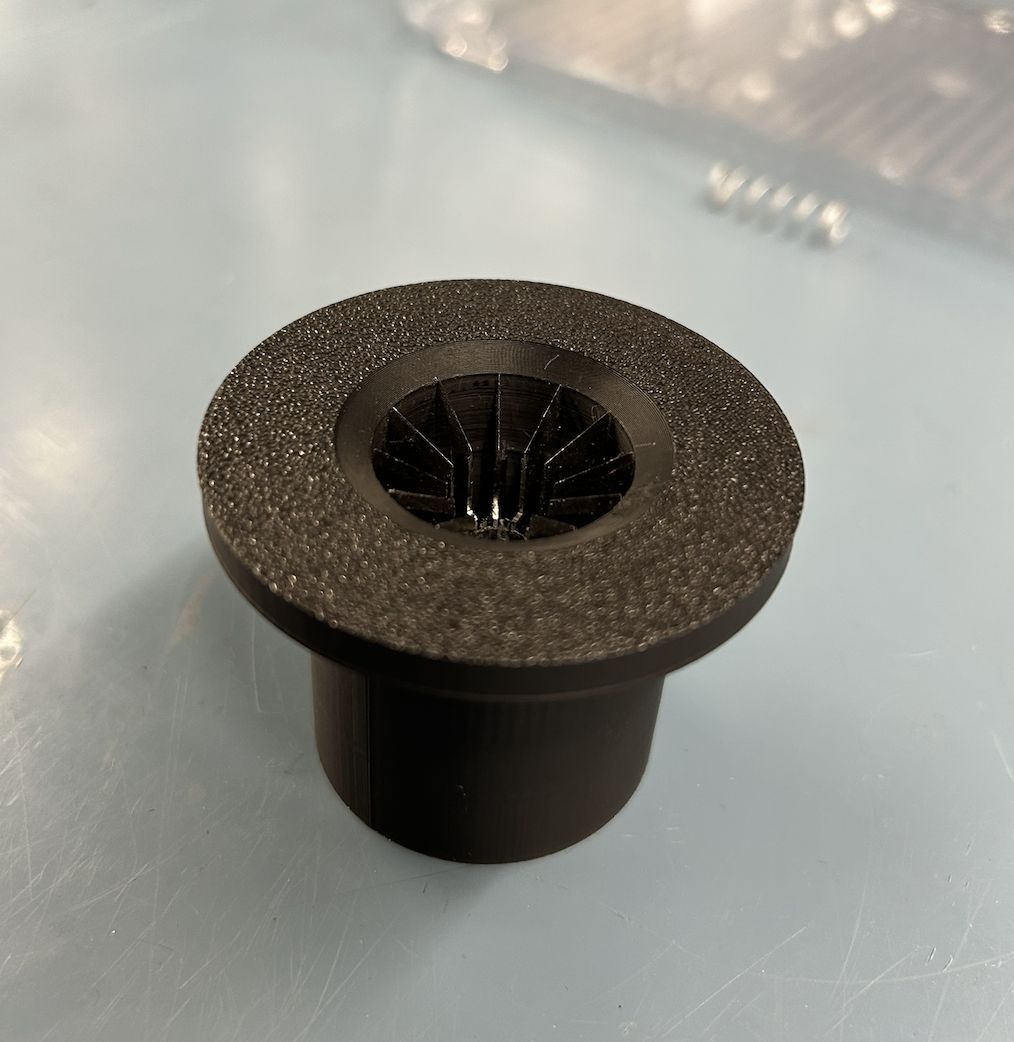
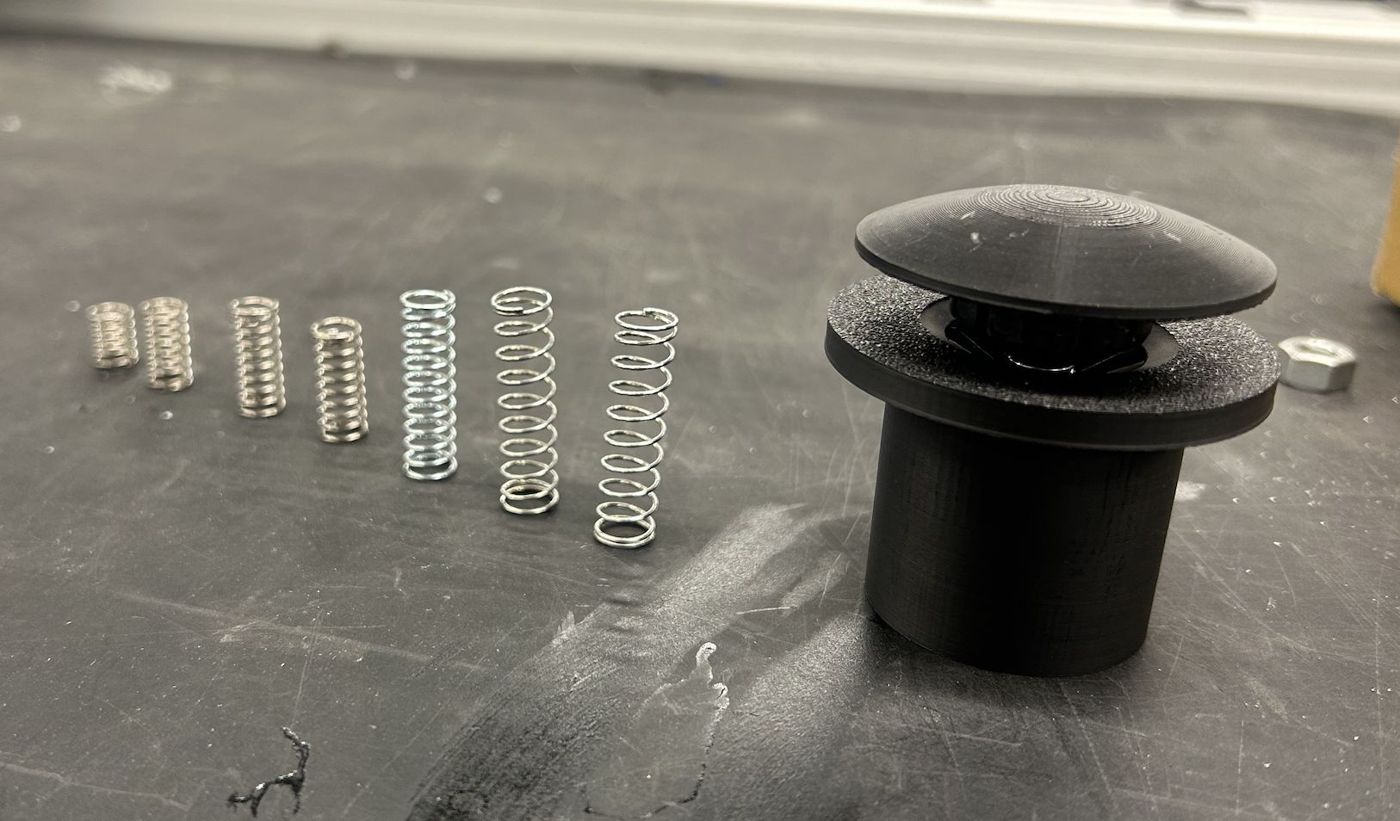
A spring-loaded cap that pushes a radial comb down through the grate. We tried springs of different stiffness to tune the feel.
Stepping on a drain feels natural. The spring has to be light enough for a bare foot and still return the cap on its own.
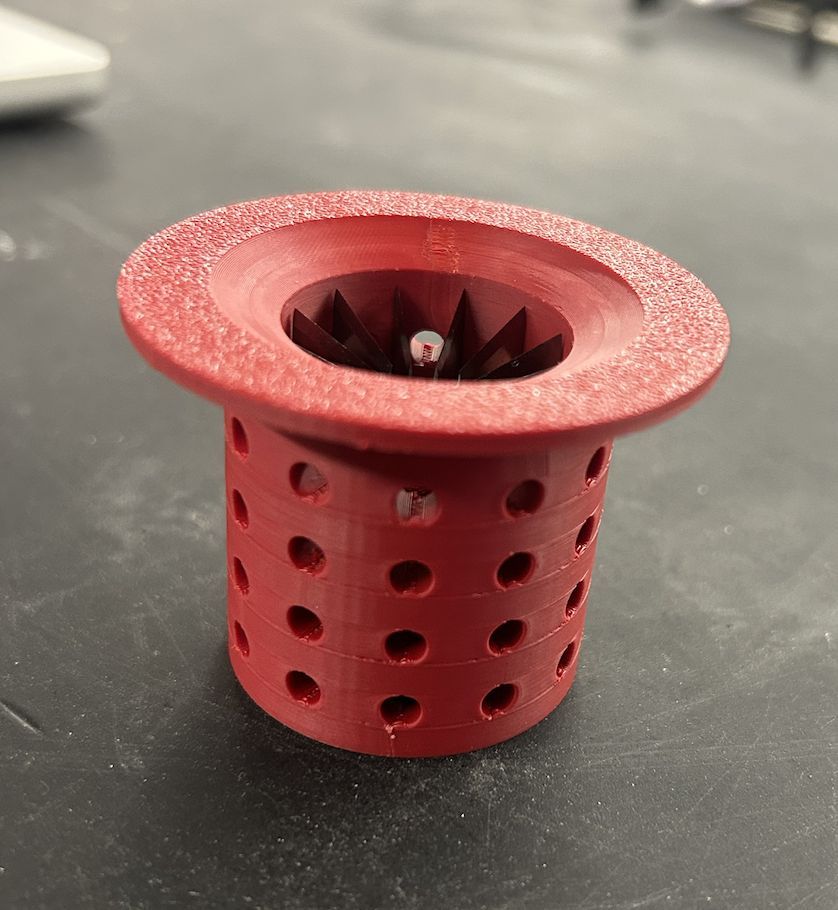
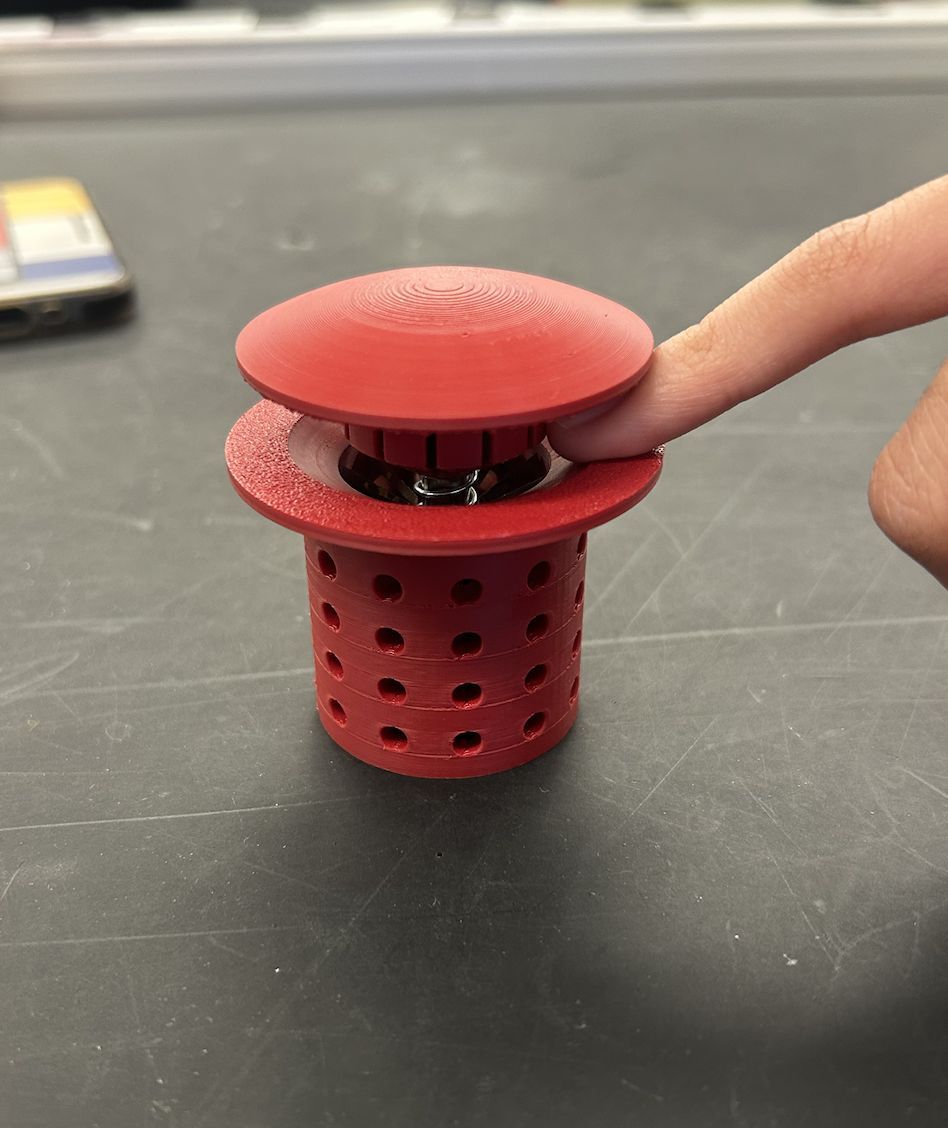
A perforated basket to improve water flow, with reciprocating blades that plunge on each press.
Hair wrapped around the blades instead of being cut. A plunging blade pushes hair aside. The cutting principle had to change.
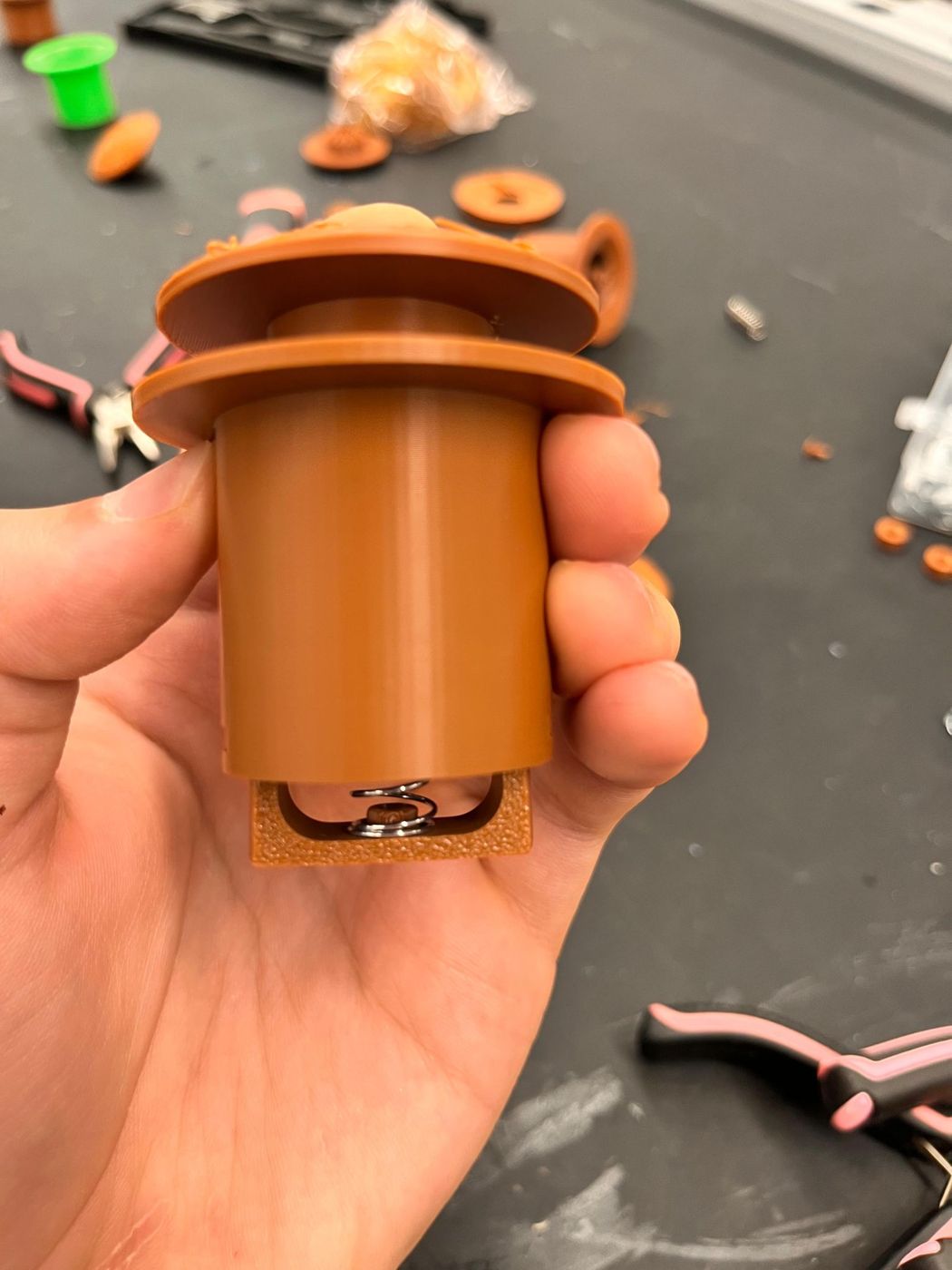
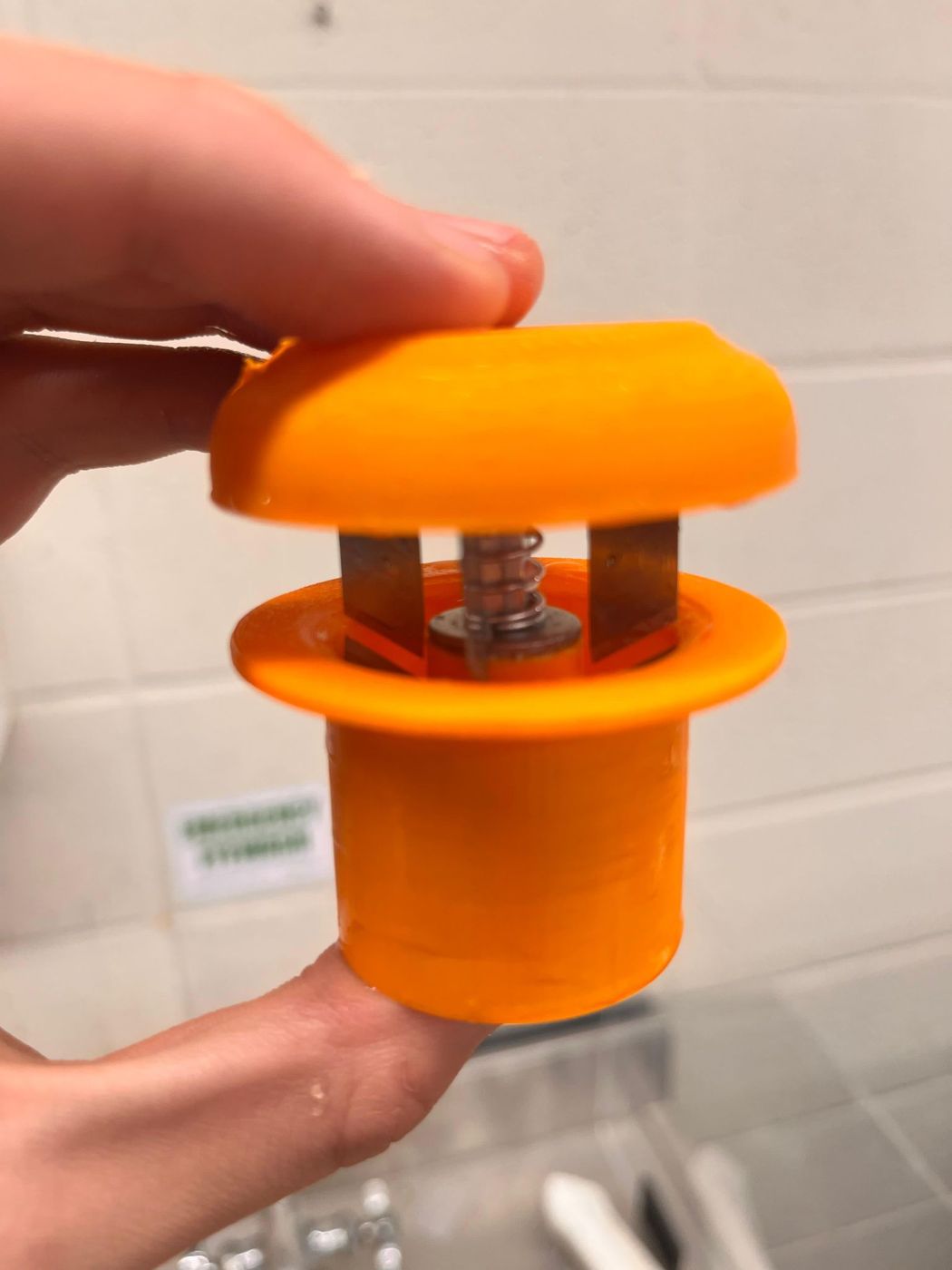
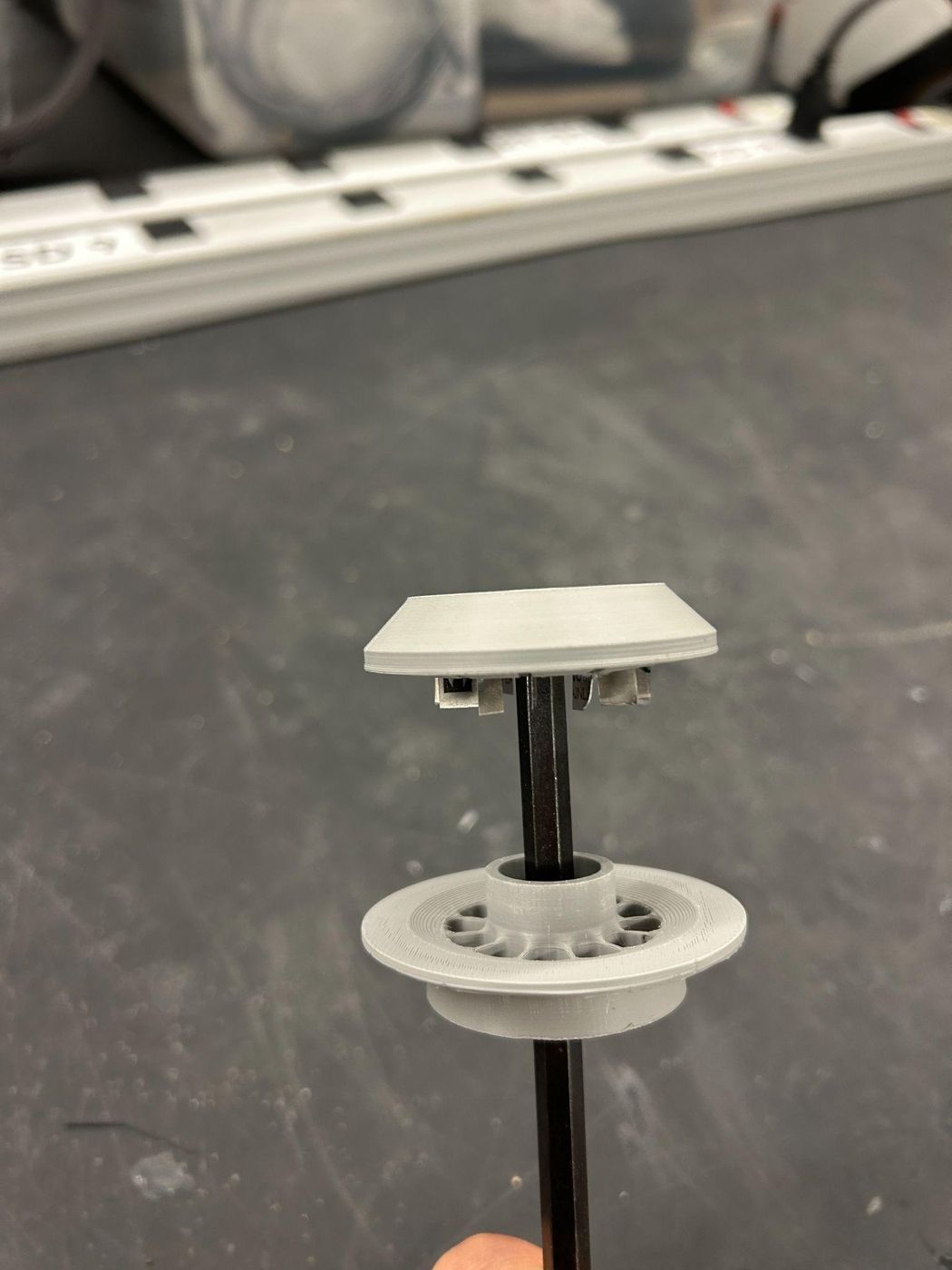
Reworked internals checked in section view, razor blades to prove hair could be cut at all, then a rotating blade star instead of a plunging comb.
Rotation cut better than plunging, but a single moving blade still let hair slip past.
Two blades sliding past each other cut hair cleanly. We rebuilt the mechanism around how scissors work.
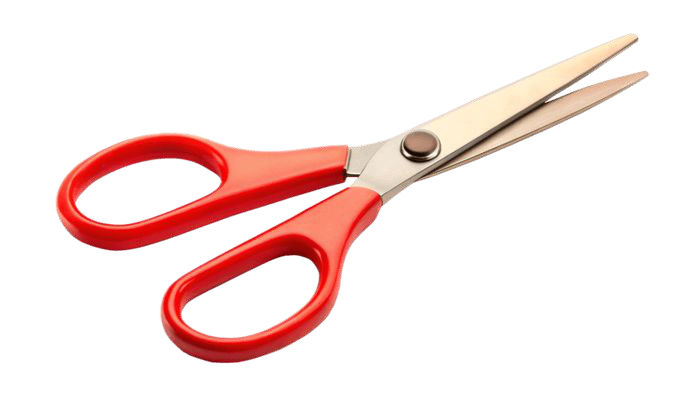
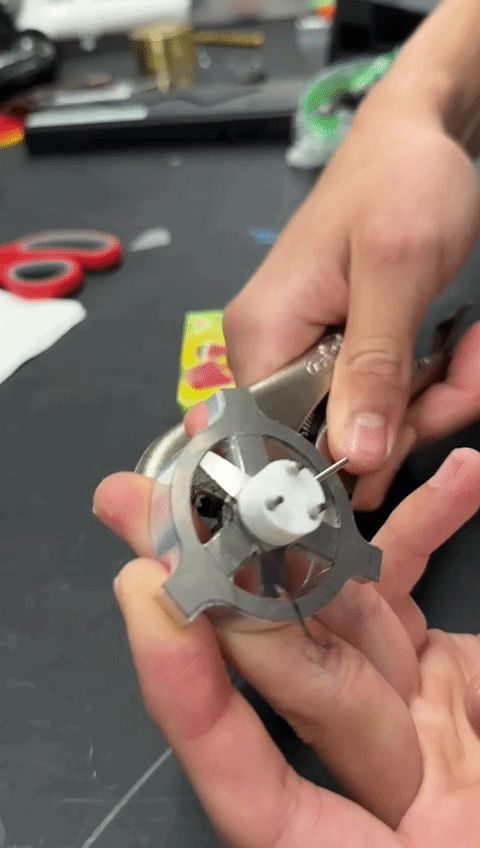
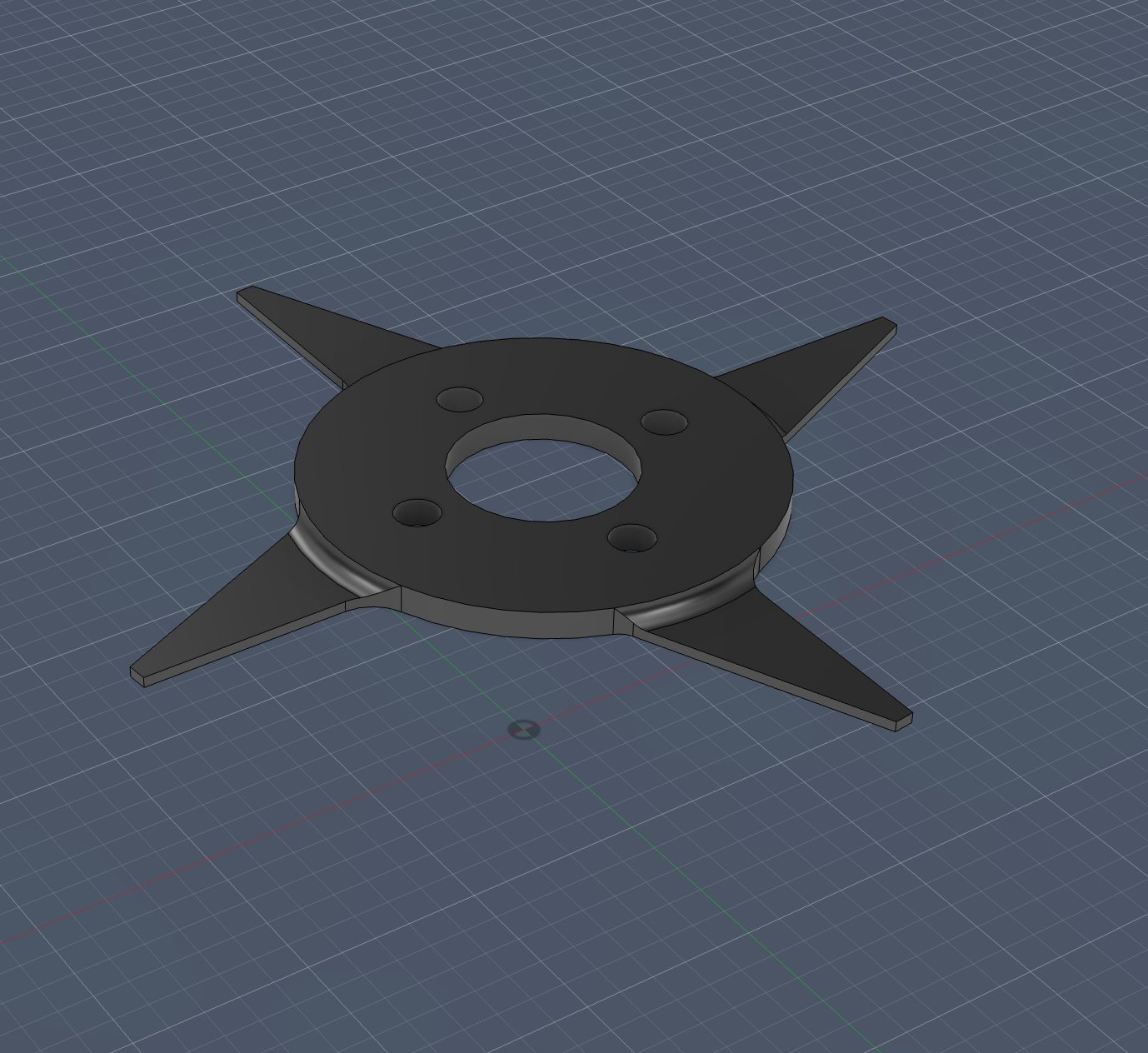
A cam shaft spins a rotating blade across a fixed blade cross. The rotating blade is bent 10° inward, the same way scissor blades bow toward each other.
The pre-bow keeps the blades pressed together, so the shear holds up stroke after stroke. This became the final mechanism.
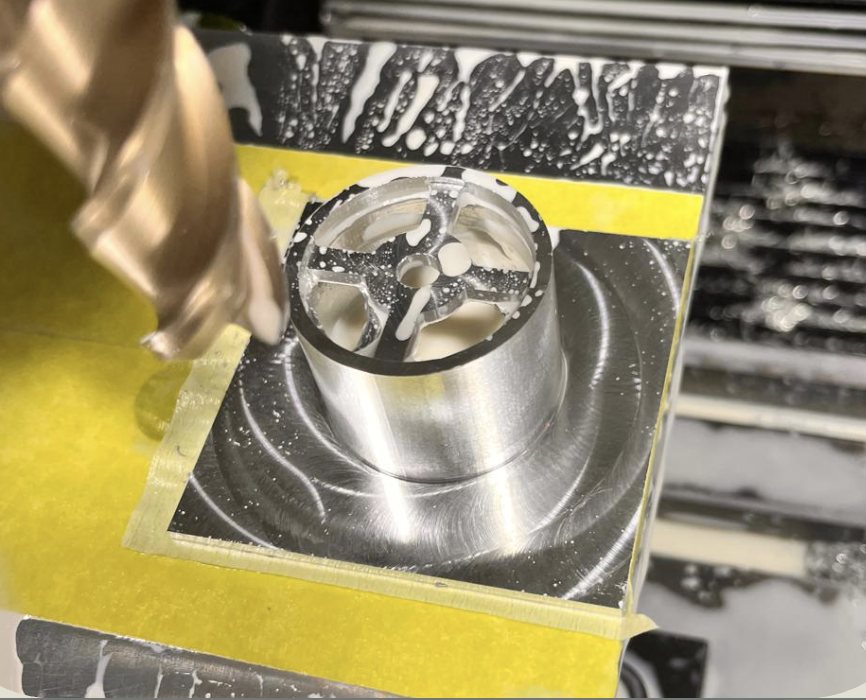
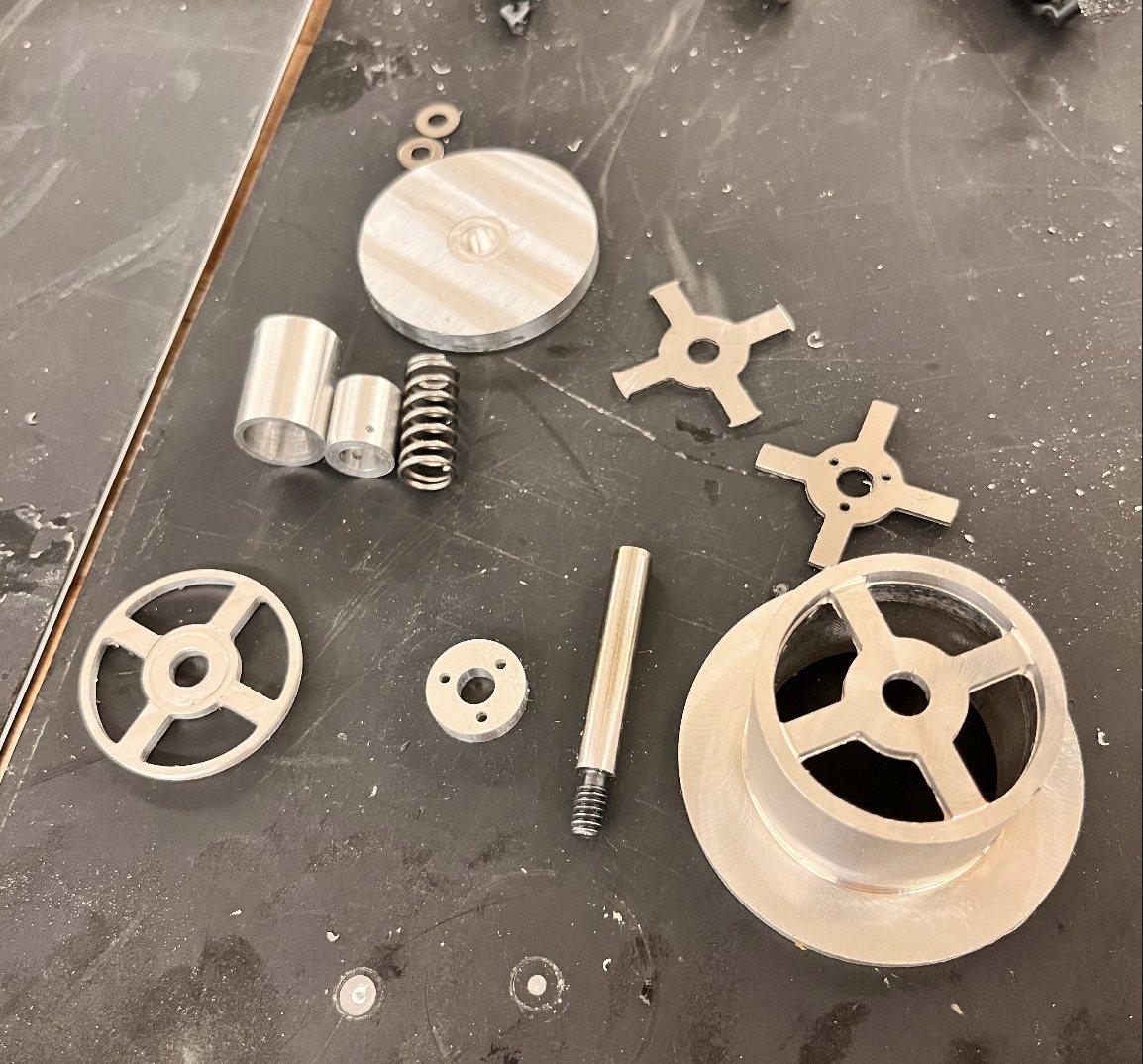
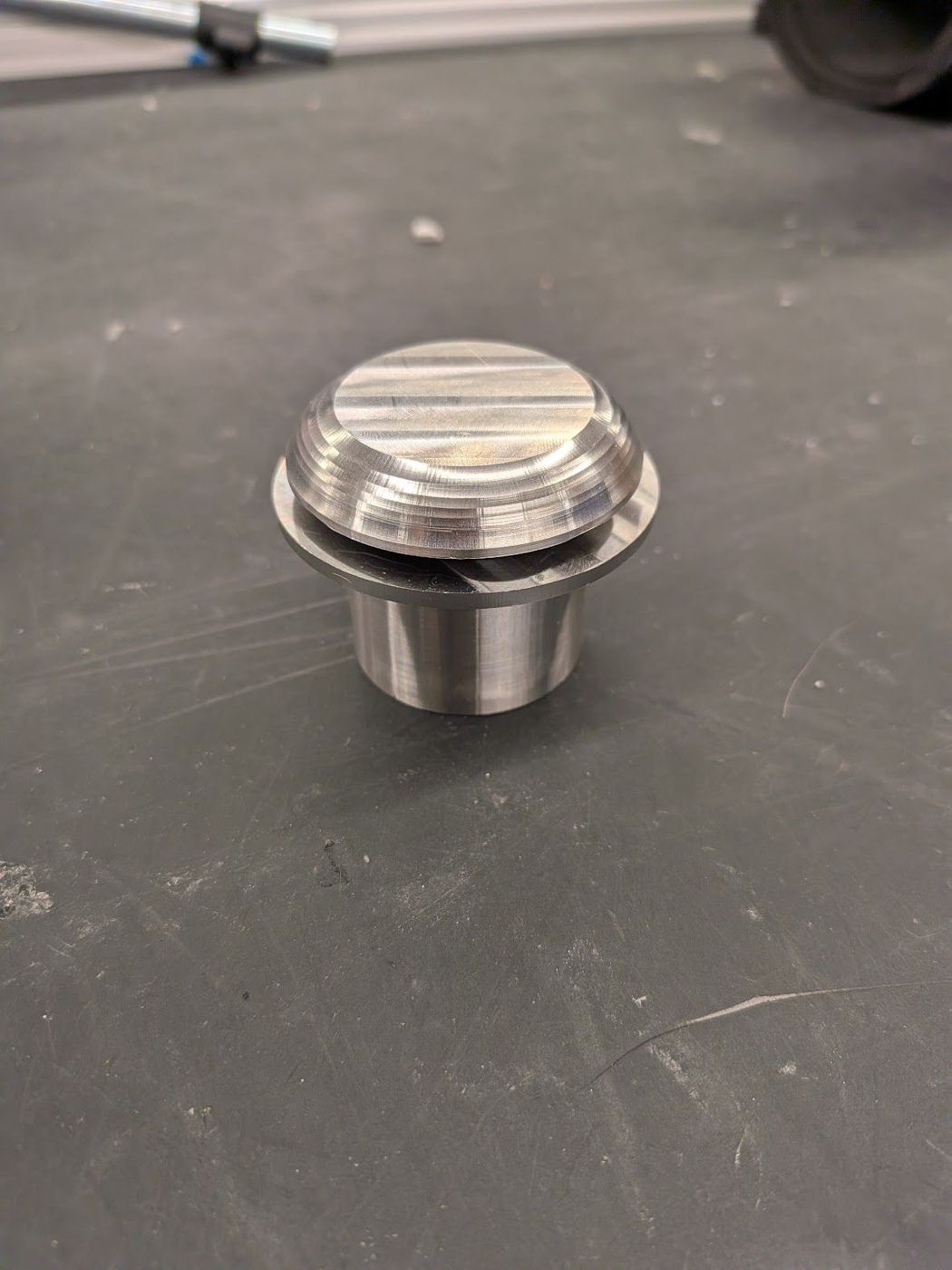
Moved to machined metal for real tolerances and blade contact, ending with ten precision-machined 303 stainless parts, assembled by hand.
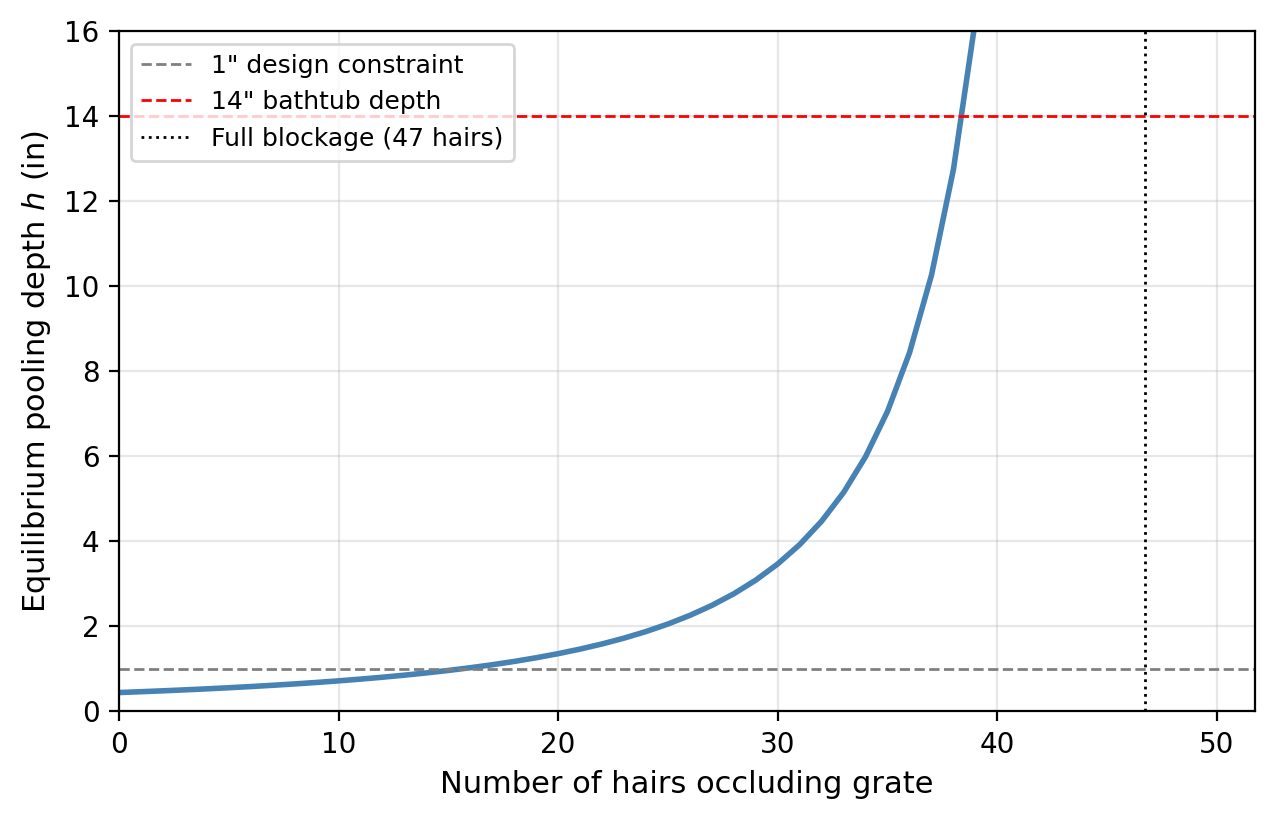
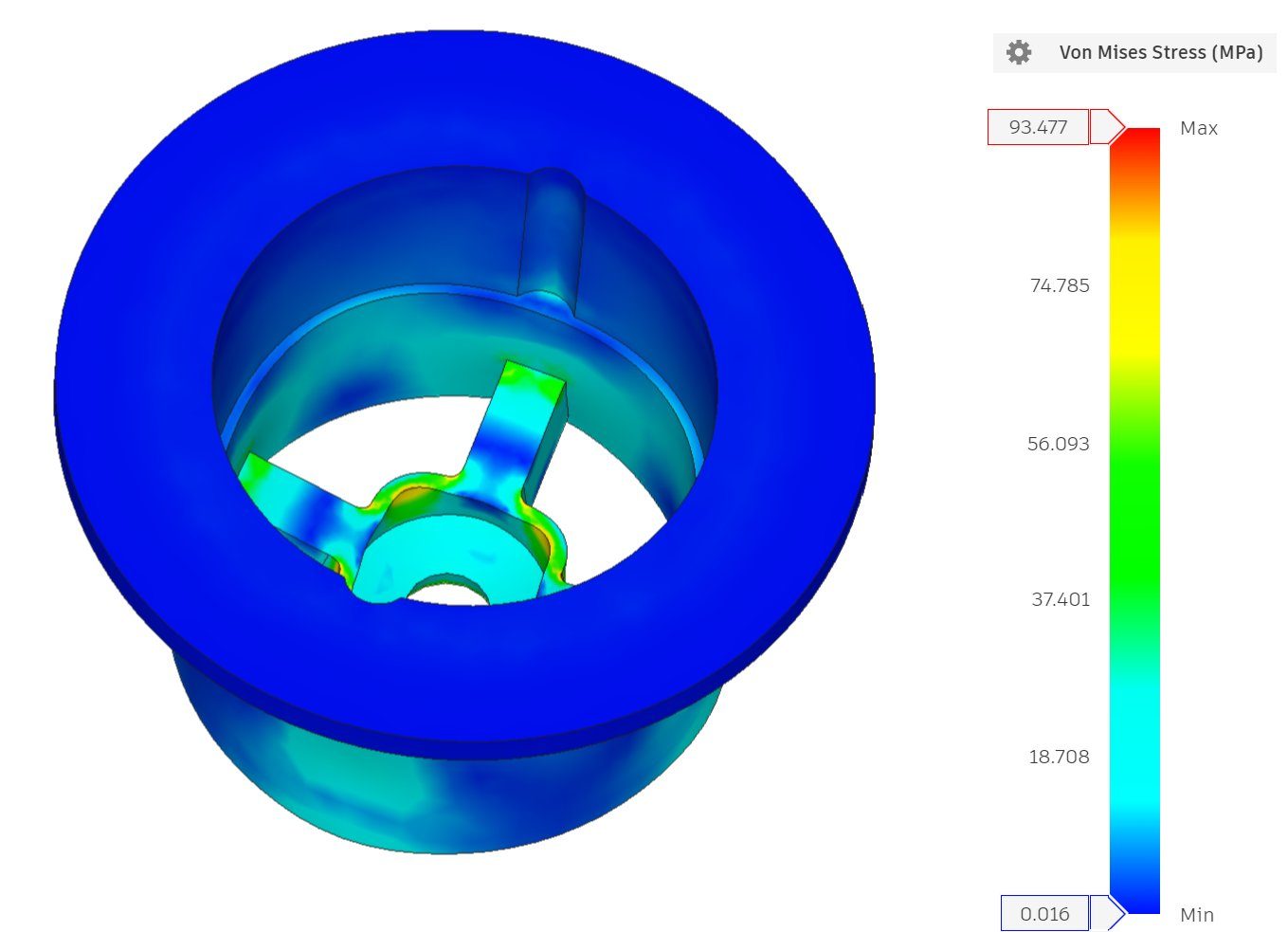
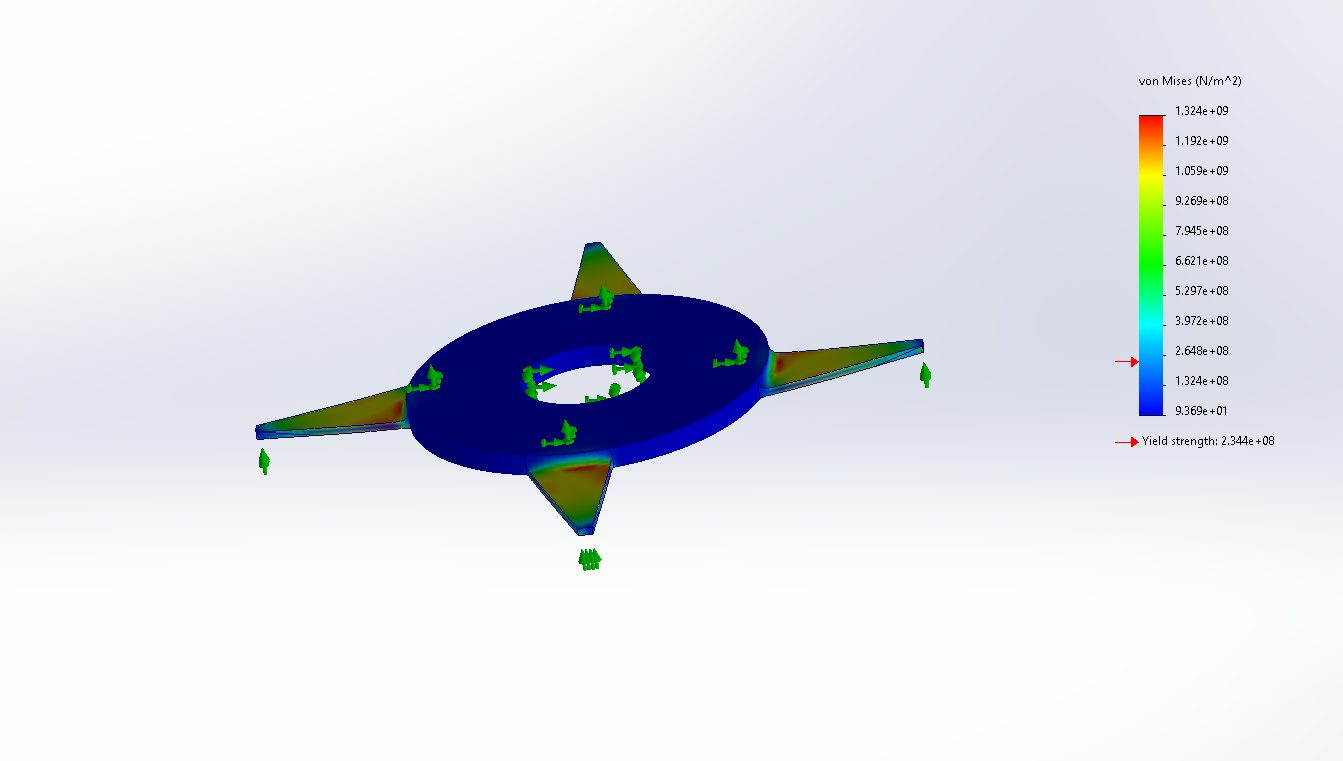
Analysis drove the final details: a fillet at the blade root, razor blades removed, and every gap to the blades kept under the 0.34" finger-access limit.
06 / Simulations and experiments

07 / Standards compliance
1.5" nominal OD requirement
TubStep: 1.5"0.025" to 0.134" wall thickness
TubStep: 0.095"Tubular plumbing material and thickness
TubStep: Pass